Mission & Vision
The mission of NPAIHB is to eliminate health disparities and improve the quality of life of American Indians and Alaska Natives by supporting the 43 Federally Recognized Tribes in the States of Idaho, Oregon, and Washington (Northwest Tribes) in their delivery of culturally appropriate, high-quality healthcare.
Health and Wellness for the Seventh Generation.
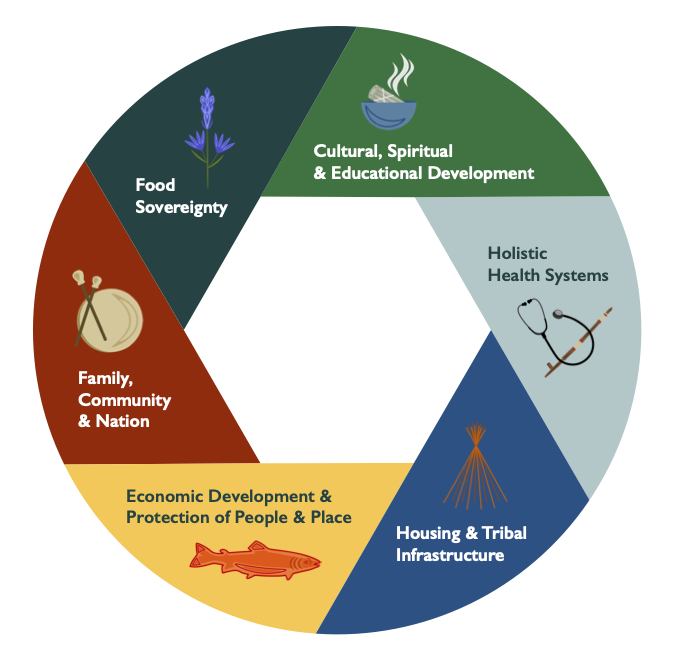
What are the Tribal Social Determinants of Health?
Social Determinants of Health are the conditions in which people are born, grow, live, work, and age—all of which influence health. They offer a holistic way to look at community health and well-being, complimenting many Indigenous worldviews of interdependence, connection, and kinship. NPAIHB worked with Tribal leaders, its Board Members (also known as Delegates), and staff to create a culturally specific version grounded in the unique context and strengths of Northwest Tribes: the Northwest Tribal Social Determinants of Health.
Our Strategic Plan
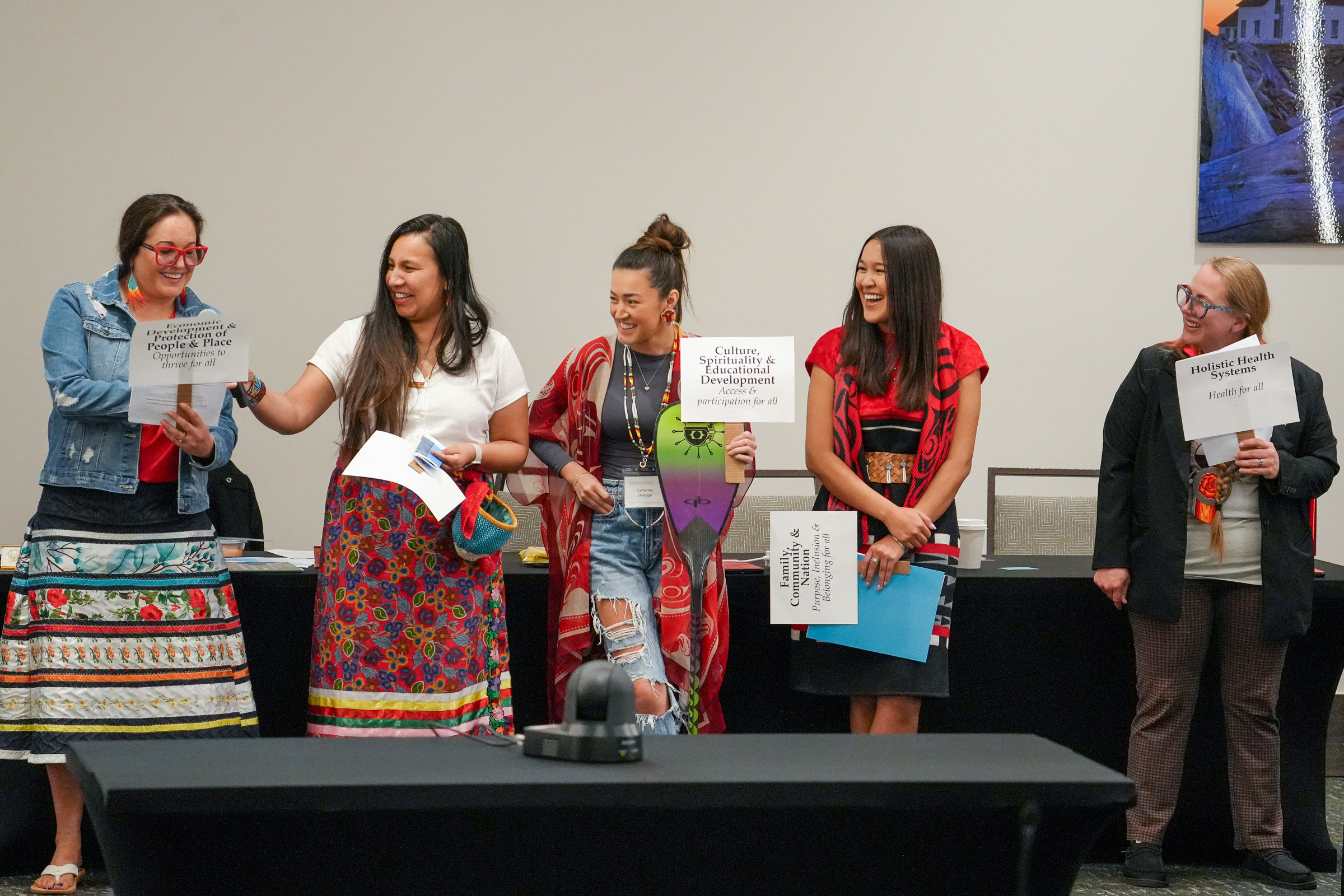
NPAIHB’s 2025–2030 Strategic Plan sets the big vision and priorities for our organization and is built around the Tribal Social Determinants of Health.
Learn MoreOur Role
Our role at NPAIHB is grounded in the relationships we have built with Northwest Tribes for more than 50 years. We work alongside the Tribes of Idaho, Oregon, and Washington to support Tribal health priorities through programs, outreach, training, technical assistance, research, data, and policy advocacy. From providing direct support when Tribes request it, to collecting and sharing data that informs decisions, to elevating Tribal priorities in policy discussions, our work is centered on strengthening Tribal capacity, supporting self-determination, and turning Tribal priorities into action.
FAQs About NPAIHB
How many member Tribes in each state does NPAIHB serve?
The State of Idaho has five federally recognized Tribes.
The State of Oregon has nine federally recognized Tribes.
The State of Washington has 29 federally recognized Tribes.
What is a Tribal advisory organization or a “638 organization”?
NPAIHB was formed by Tribal leaders from Northwest Tribes and we operate as a Tribally directed organization under the Indian Self-Determination and Education Assistance Act (ISDEAA) Public Law 93-638. This law advances Tribal self-determination and Tribally led health programs, ensuring Tribes directly manage health care services to better meet their communities’ specific needs.
How many individual projects and programs does NPAIHB have?
NPAIHB has more than 30 programs and projects serving the Northwest Tribes in the areas of:
- Epidemiology: support and services in data collection, research, surveillance and evaluation
- Public Health: programs (chronic diseases, food sovereignty, adolescent health) and Tribal systems modernization.
- Clinical: programs (dental, behavioral health) and education (ECHO, CHAP)
- Environmental: programs (lead testing, car seats) and education (safety courses)
- Policy: federal and state advocacy in support of Tribal priorities
Services are provided through trainings, long and short-term technical assistance, systems, and communications.
Does NPAIHB provide direct healthcare services to individuals?
No. NPAIHB does not offer direct clinical medical services to individuals. Instead, we work directly with Tribes and Tribal organizations. We provide policy advocacy, programs, education/training and technical assistance to support their provision of health care services to their people and communities.
How is NPAIHB funded?
NPAIHB is primarily funded by federal grants, contracts, and cooperative agreements from public health agencies like the Indian Health Service, the Centers for Disease Control and Prevention, and the Substance Abuse and Mental Health Services Administration and by states through their health departments or authorities such as Oregon Health Authority, Washington Health Care Authority, and Washington Department of Health, and Idaho Department of Health and Welfare.
We also rely on contributions from individuals and charitable organizations for flexible funding support. This support allows us to quickly address urgent community health crises and fill critical gaps that federal and state funding does not cover.